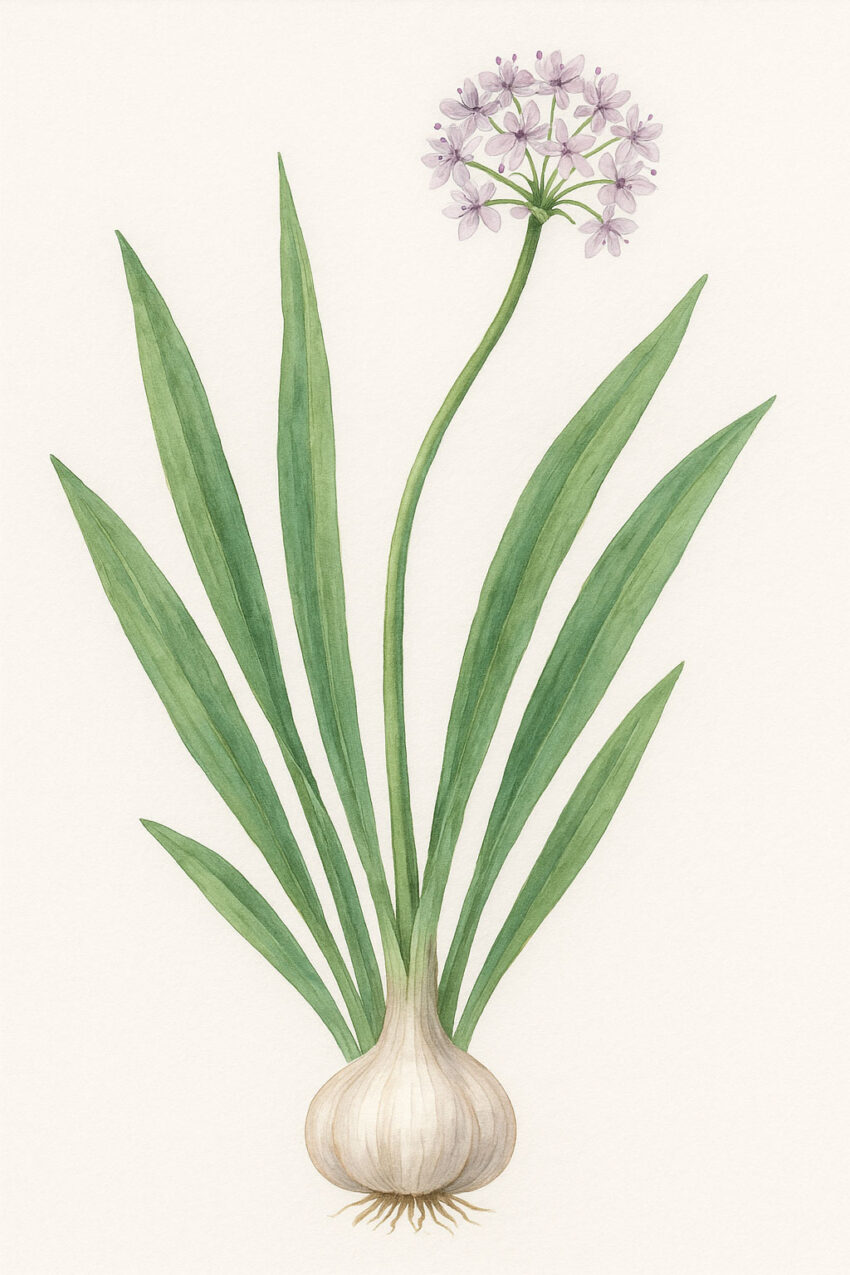
Big Picture
- Climate Considerations: Mississauga is approx. Zone 6b (some spots feel like 7a). Cold winters favor hardneck types.
- Varieties to Grow:
- Music Garlic – The #1 hardneck variety in Ontario. Large, easy-to-peel cloves, robust flavor, excellent storage, and strong cold-weather performance. 4–7 cloves per bulb.
- Tannill (German Pink/Purple) – Gorgeous large heads with 4–6 cloves, full-flavored, and grows extremely well in Ontario. A chef’s delight fresh or cooked.
- Lyubasha – Discovered in Ukraine in 1970s. Strong, pungent, great storage, with white outer skins and purple-pink stripes. Perfect for cold winters.
- Mexican Purple (Purple Stripe) – Striking purple-striped skin, hot when raw, sweet when roasted. Stunning on the plate and in the garden.
- German Red
General Requirements
- Sun: Ideally, 6–8 hours daily.
- Drainage: Critical; avoid low, soggy spots.
- Soil: Ideally, loamy soil with organic matter. Target pH ~6.5–7.0.
So we are aiming for basically neutral ph: pH 7.0 is neutral, and 6.5 is just slightly acidic—so you’re aiming for neutral to very-slightly-acidic soil.In Mississauga, assume close to neutral/slightly alkaline unless you’ve been acidifying for years—so skip lime, add elemental sulfur lightly but ONLY if plants show alkaline stress.
When to Plant in Mississauga
- Best window: Late Sep to Mid‑October to early November (Ideally 2–4 weeks before the ground freezes hard). This way cloves will get rooted a bit before hard freeze comes.
- Why fall: Natural winter cold vernalizes cloves → bigger bulbs.
What is vernalization? Vernalization = the winter chill that “arms” your garlic cloves to become full bulbs come spring and early summer.
Seed Garlic
- Choose disease‑free seed. Ensure that the garlic has not been chemically treated.
- Break bulbs into cloves 24–48 hrs pre‑planting; keep papery skins on.
- Discard damaged cloves.
Making Beds & Planting
- Build bed: Mix in 3–5 cm (1–2 in) finished compost; rake level.
- Spacing: Rows 25–30 cm (10–12 in) apart; cloves 15 cm (6 in) in‑row.
- Depth & orientation: Plant 5–7 cm (2–3 in) deep to clove tip, pointy end up.
Care Through the Seasons
- Winter: Leave mulch; snow cover is fine.
- Early spring (Apr): Shoots push through; top‑dress with compost or a light nitrogen feed.
- Water: ~2.5 cm (1 in) per week until mid–late June; reduce watering near harvest to avoid split skins.
- Weeds: Keep weeds down (garlic competes poorly with weeds). Ideally we deweed when planting, then again just before winter comes. But be careful that you don’t uproot the cloves. Then in spring we again deweed. Be very careful that you don’t break the leaves of the garlic plants. If you break the leaves it’s quite likely your garlic will turn out to be small. It is best to deweed as early as possible in spring before the garlic plants mature and walking between beds becomes difficult. Pull out weeds very carefully without disturbing the garlic plants instead of just cutting them off at the top.
- Scapes: In June, snap off curly scapes once they loop—eat them and redirect energy to bulbs.
Pests & Diseases
Generally speaking I find that garlic is not attacked by pests. However here are some considerations for reference.
- Common: Onion thrips, leek moth; occasionally onion maggot; fungal rots in wet soils.
- Prevention:
- Rotate alliums for 3–4 years (avoid spots that had onions/garlic/leeks).
- Ensure good drainage; use clean seed; remove plant debris.
- Use row cover if leek moth is an issue (remove at scape time for pollinators if flowering nearby).
When to Harvest & Cure
- Timing: Mid–late July (watch weather). Harvest when 3–4 green leaves remain (others browned).
- Method: Loosen with a mini shovel; lift bulbs by the base (don’t yank by tops).
- Curing: 2–3 weeks in a shaded, airy place (bundles or screens). Don’t wash; just brush off soil.
- Trim & store: After curing, cut stems/roots; store cool, dry, ventilated (avoid sealed bags/fridges). You can store garlic in mesh baskets in a cool and dry basement area. The garlic will store well till late Feb to mid-march or even later.
Quick Mississauga Calendar
- Oct–Nov: Plant & mulch.
- Apr: Light feed; weed.
- May–Jun: Water/weed; remove scapes (eat!).
- Jul: Reduce water; harvest when 3–4 leaves are green. The number of leaves that are left is the best indicator for harvesting.
- Jul–Aug: Cure 2–3 weeks; trim & store.
Common Mistakes
- Planting too shallow or too late
- Soggy soil
- Leaving scapes on
- Overwatering near harvest
Fun Facts
- Botany: Garlic is Allium sativum. “Elephant garlic” isn’t true garlic—it’s a mild leek (Allium ampeloprasum).
- Hardneck vs. softneck: Hardneck (great for Mississauga) makes a stiff central stalk and tasty scapes; softneck braids well.
- Ontario classic: “Music” is a Porcelain‑type hardneck popularized by Ontario growers—big cloves, bold flavor, very winter‑hardy.
- Each clove = one bulb: Plant a single clove; harvest a whole bulb. Save your biggest bulbs for next fall—size breeds size.
- Winter magic: Cold exposure (“vernalization”) helps form big bulbs—our winters do the work for you.
- Scapes are food: The curly scape you snap in June is delicious—pesto, stir‑fries, pickles—and removing it helps bulbs size up.
- Timing trick: Many local gardeners plant after Thanksgiving and before a hard freeze—easy rule of thumb.
- Not a variety: Black garlic is slow‑cooked/fermented garlic, not a different type.
- Good neighbors: When planting, Garlic pairs well with beets, carrots, and lettuce; avoid planting right after onions/leeks.
Theoretically we should avoid planting garlic after onions/leeks because all are Alliums, so soil-borne diseases (white rot sclerotia, Fusarium/pink root, downy mildew) and pests (leek moth, onion thrips) carry over and intensify, and overlapping nutrient demands weaken plants; instead, rotate Alliums out of that bed for 3–4 years, follow with non-Allium crops/cover, and use clean seed with good drainage. However you can use your judgment if this makes sense for you (due to various constraints of time, availability of growing area etc).
Recap
Plant in fall, feed in spring, snap scapes in June, harvest in July when 3–4 leaves are green, cure well.
APPENDIX
Why We Prefer Hardneck
- Ontario-ready: Thrives in Mississauga’s winter.
- Kitchen-friendly: Large, easy-peel cloves make prep fast and waste-free.
- Two harvests: Enjoy delicious garlic scapes in June and full bulbs in July.
- Local favourite: Proven Ontario varieties like Music deliver outstanding flavor.
For long-term use, many cooks simply freeze peeled cloves or dehydrate for homemade garlic powder—easy and tasty. Ideally though you should not need to freeze garlic since garlic loses some nutrients if refrigerated or frozen. If cured well (i.e., dried thoroughly) and then stored in a cool dry place, your garlic will store well for many months even till mid spring next year.